Neighborhoods Guides
Millionaire's Row is a single historic street in Seattle's North Capitol Hill neighborhood.
Written by Kale Corey
Seattle real estate agent specializing in North Capitol Hill
Last updated October 2026
Millionaire's Row is a single historic street in Seattle's North Capitol Hill neighborhood: 14th Avenue East, running between East Roy Street and East Prospect Street, ending at the south entrance of Volunteer Park. The mansions here were built by the city's early business leaders between 1902 and 1914, and most of them are still standing. In January 2021, the National Register of Historic Places listed the street as a historic district.
It's called Millionaire's Row because of who lived here. Between 1902 and 1914, Seattle's wealthiest business leaders built their homes along a single stretch of 14th Avenue East, and the name stuck. The street has also been called the Avenue of Mansions and Volunteer Parkway.
Most frequently, they moved to North Capitol Hill to get away from the hustle and bustle of the expanding city. As their fortunes grew, they wanted more house and more land than Downtown Seattle could offer, and new streetcar lines made the distance workable. James A. Moore understood exactly what he was selling. He paved the streets and laid the sidewalks before a single lot went on the market, and he promised that no lot on Capitol Hill would be more than a two minute walk from a streetcar line. Capitol Hill was a retreat, and Moore advertised his lots as "the last of strictly first class residential property in Seattle." The men who bought them built near each other on purpose, forming their own small enclave above the city.
Learn more about the events that led to Millionaire's Row →
Millionaire's Row is 14th Avenue East between East Roy Street and East Prospect Street, in the North Capitol Hill neighborhood of Seattle. It runs south from the entrance of Volunteer Park. It is one street, not a neighborhood, which is why you won't find it on a city map.
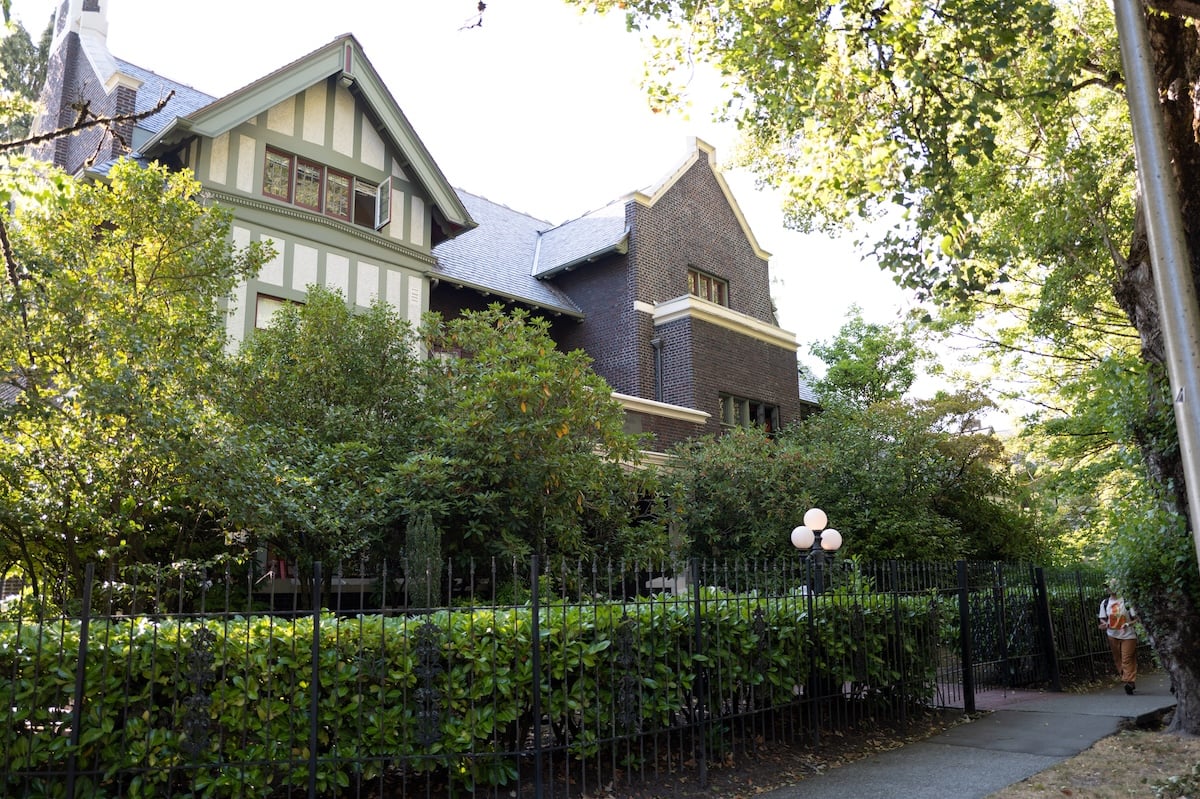
Millionaire's Row has no single style. The Parker-Fersen is Neoclassical Revival, the Shafer Baillie is Tudor Revival, the Moore Mansion is French Renaissance Revival. Most of the street was built between 1902 and 1914. Two firms recur: William D. Kimball designed the Moore Mansion and, directly across the street, the Thomas Bordeaux House. Bebb & Mendel designed the Stuart and, nine years later, the Shafer Baillie. The street was fueled by fortunes made from beer, ships, timber, milk, dry goods… and one fortune that turned out to be a federal crime!
Twenty-three addresses stand on the row today, three of them carriage houses. There are four residences you may see referred to the most, including:
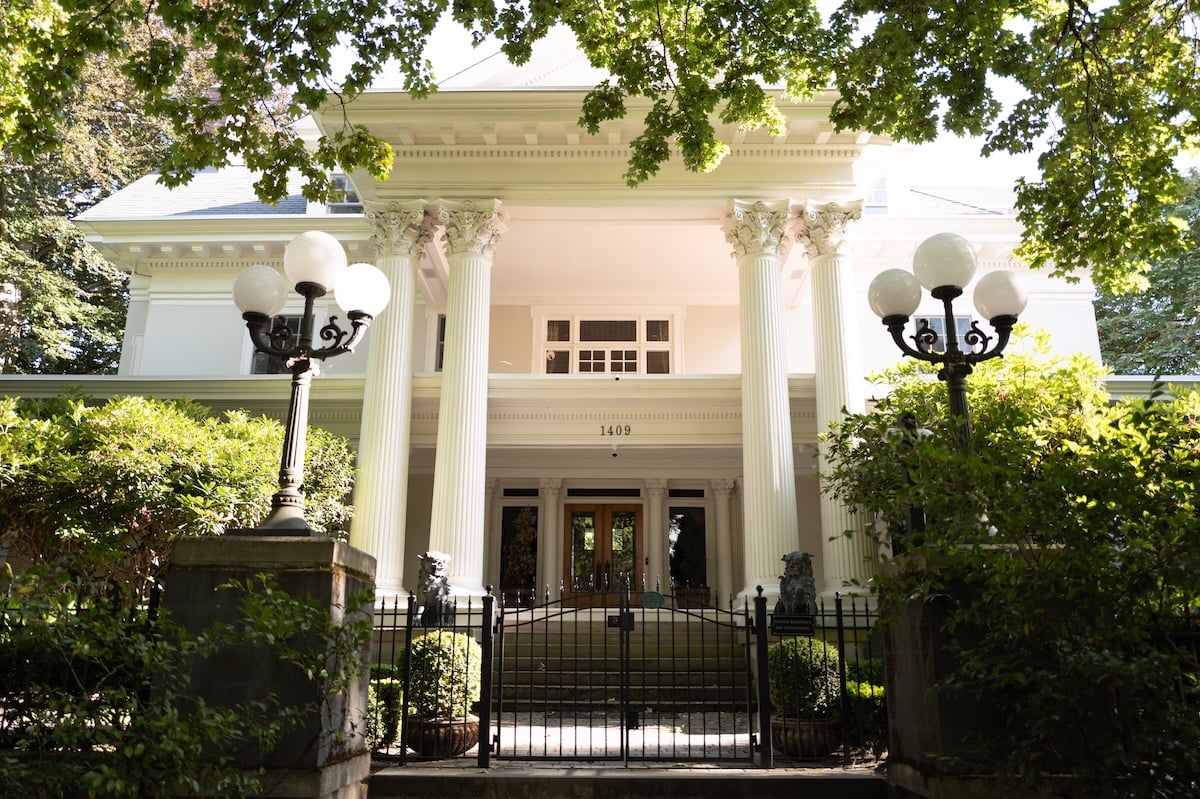
1409 E Prospect St · Built 1908 · 9,330 sq ft · Neoclassical Revival · Frederick Sexton, architect · Seattle Landmark
Here’s the tea: The white house facing the park was paid for with stolen money. George H. Parker sold shares in a wireless telegraph company that owned no patents and put only about $200 of every $1,000 it raised toward actually building anything. He cleared over a million dollars and was sentenced to federal prison in 1911. He spent $100,000 of it here, building his mansion. A later owner was stranger still: Eugene Fersen, who claimed Russian nobility and founded a philosophy called The Lightbearers. His followers ran a Science of Being College out of the house into the 1980s. Fascinating!
The Parker-Fersen Mansion was sold in March 2026 for $5 million.
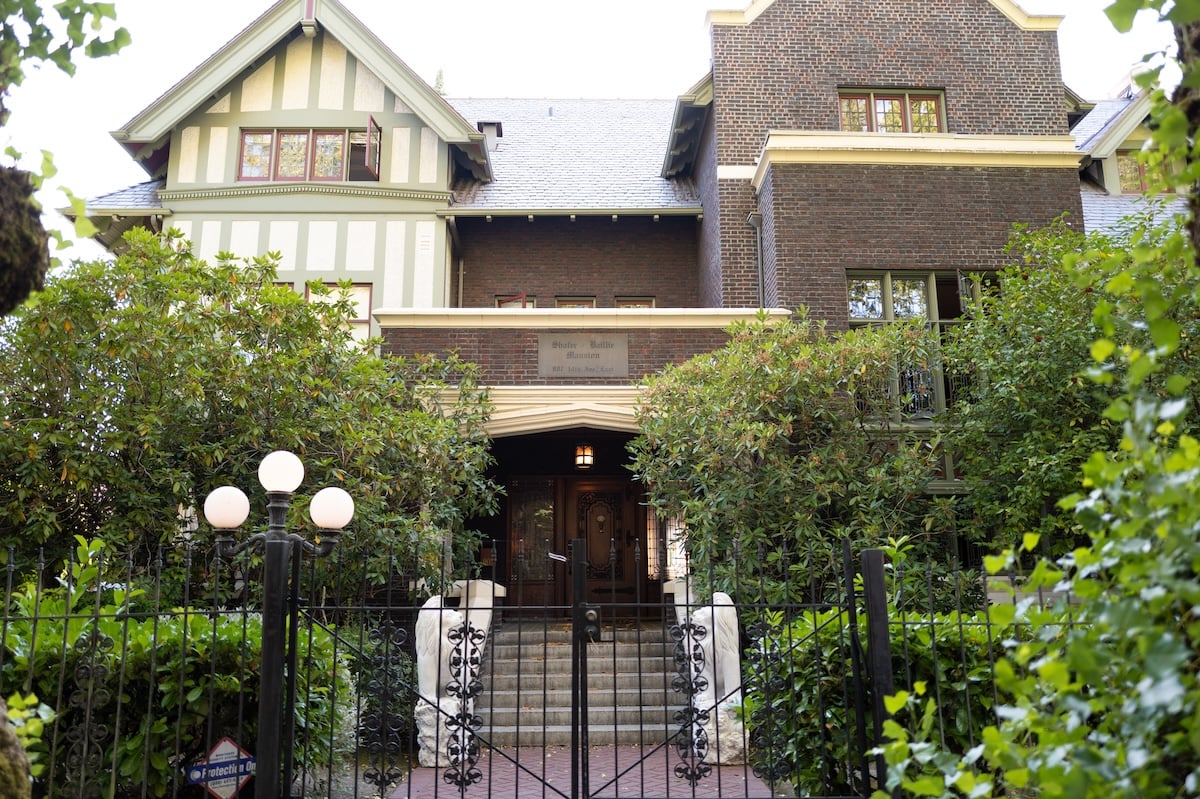
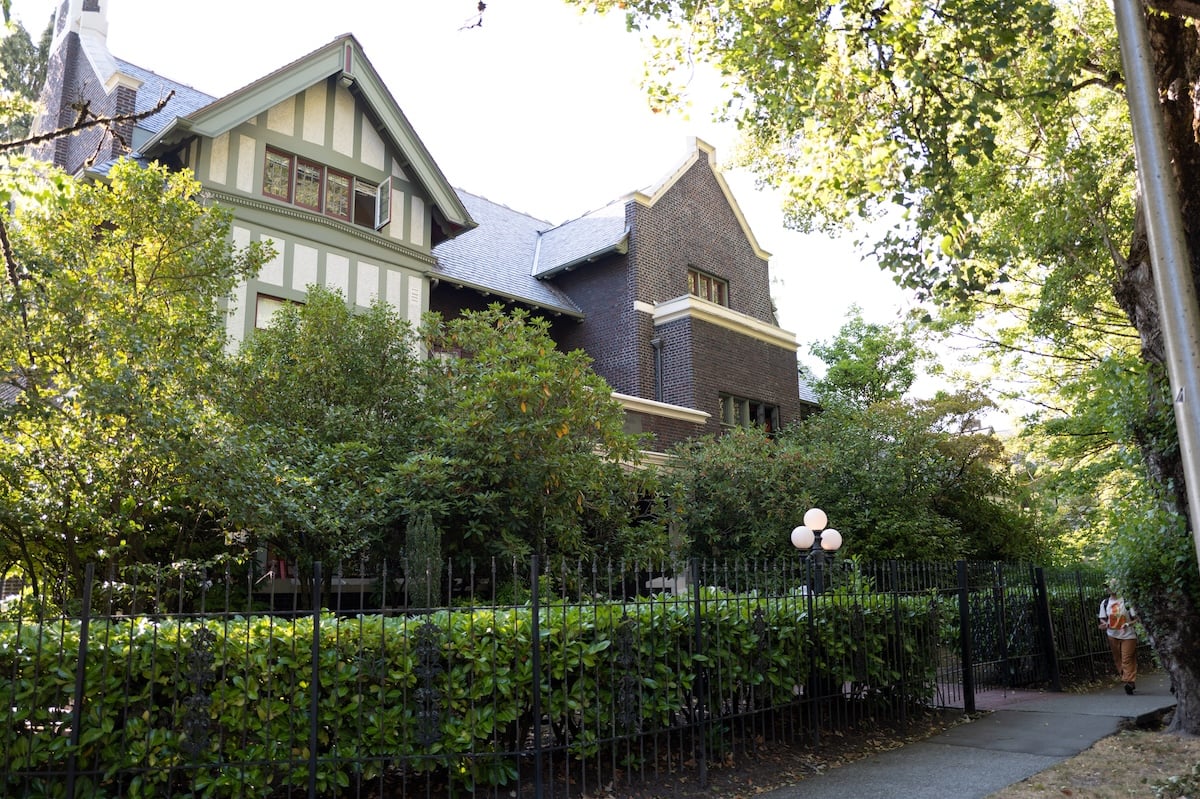
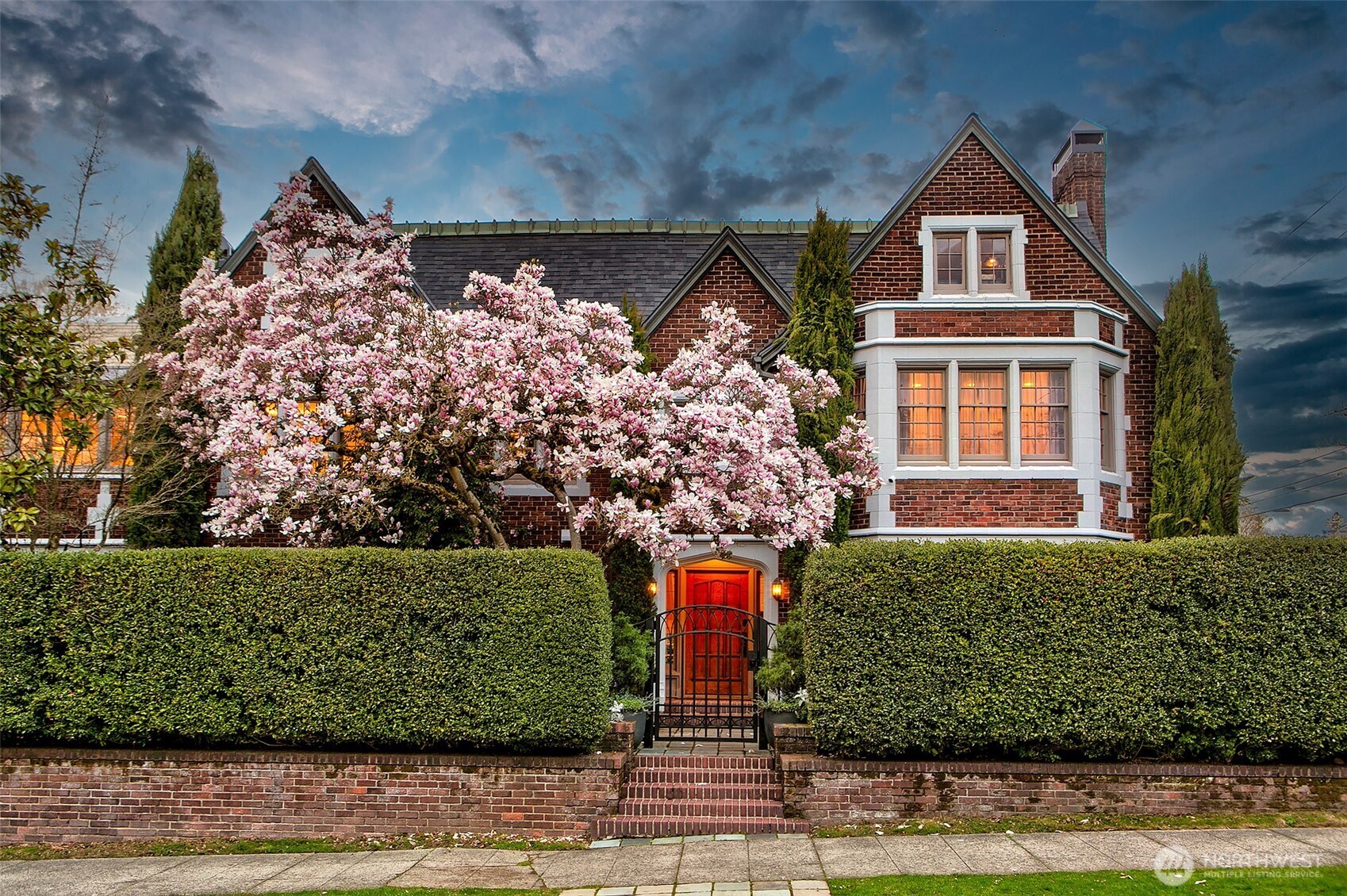
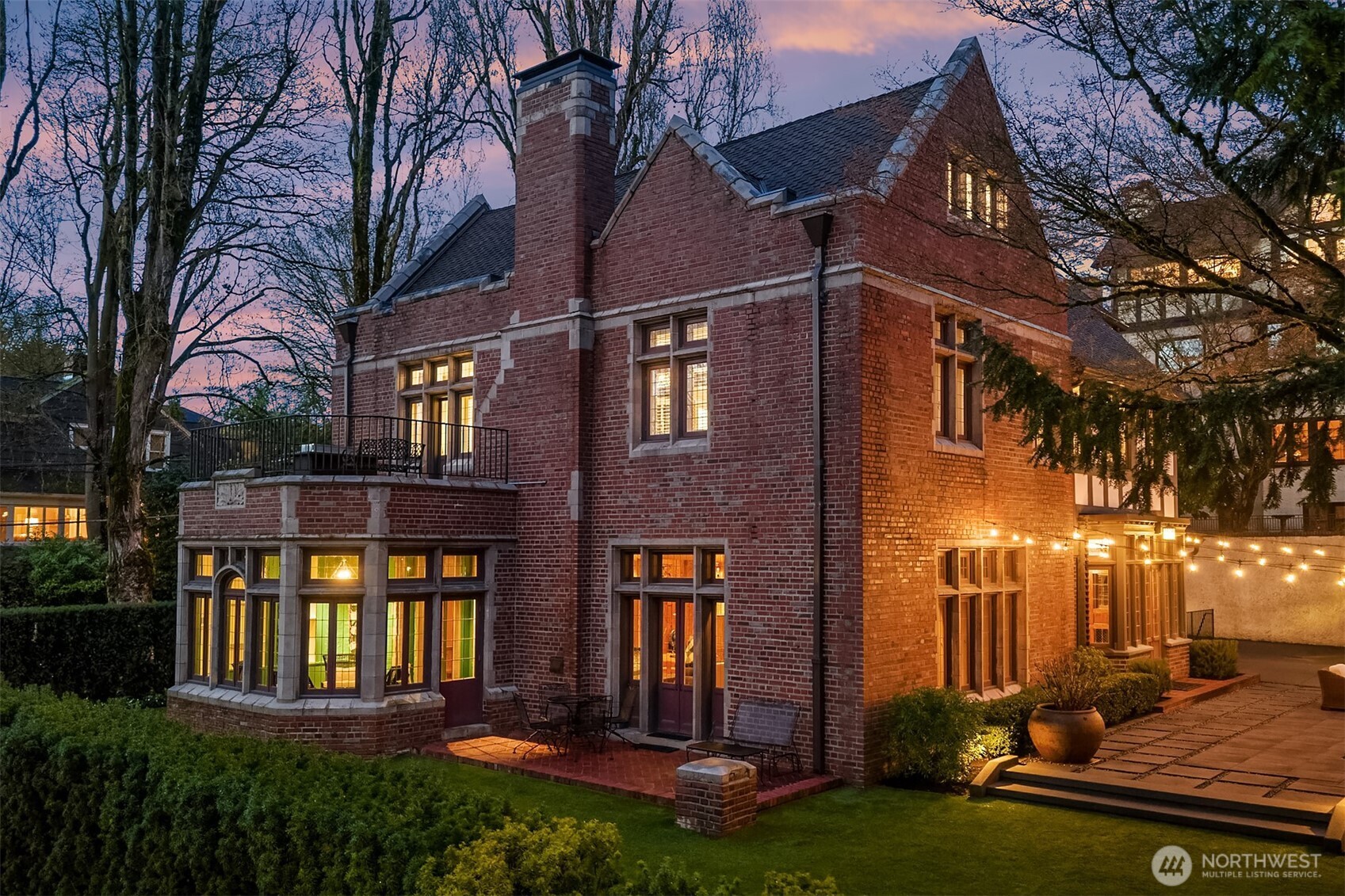
907 14th Ave E · Built 1913 · 14,000 sq ft · Tudor Revival · Bebb & Mendel, architects
Fourteen thousand square feet of brick and half-timbering, and neither name on it belongs to the man who built it. That was Samuel S. Loeb, a founder of Seattle's Independent Brewing Company, who saw Prohibition coming and left for San Francisco. Alexander Baillie, a Scottish shipping magnate, came next. Julius Shafer, who reached Seattle with his brother and $700 and got rich outfitting Klondike prospectors, bought it in 1928. Beer, ships, dry goods. Long a bed and breakfast, it's the one mansion most people have gotten inside, and in 2027 it becomes a hotel.
The Shafer Baillie Mansion was sold in 2026 for $4.9 million.
811 14th Ave E · Built 1903 · Renaissance Revival · William D. Kimball, architect · Seattle Landmark
Capitol Hill as we know it exists largely because James A. Moore bought it. In 1900 his company took a large piece of the hill for $225,000, put in the streets and sewers, and sold the lots. Three years later he built himself a house on the street he'd just made. Moore earned perhaps $15 million and lost every dollar of it in a steel mill, then went to Florida and platted the first town in the Everglades. A hurricane flooded it in 1926 and he left. Unfortunately, he died penniless in 1929. Timber money moved in: Joseph Bordeaux, whose brother lived across the street.
720 14th Ave E · Built 1904 · Tudor Revival with Craftsman elements · Bebb & Mendel, architects
The least expensive mansion of the four belonged to the man whose money lasted longest. Stuart permitted it in 1904 for $9,500, about half what Moore spent and a quarter of the Baillie, because he was building early. He and a partner had bought a bankrupt evaporated milk plant in Kent for $5,000 in 1899, and he had not yet turned it into Carnation. By his death in 1944 the company was manufacturing in 22 states and seven countries. Nestlé bought it in 1984 for three billion dollars. The granite block at the corner still says Stuart.
House | Address | Built |
|---|---|---|
Parker-Fersen Mansion | 1409 E Prospect St | 1908 |
C. D. Hills House | 1021 14th Ave E | 1977 |
Edward Ederer House | 1007 14th Ave E | 1903 |
Charles Erickson Carriage House | 1001 14th Ave E | 1903 |
Nathan Eckstein House | 1000 14th Ave E | 1914 |
Fred Rowell House | 925 14th Ave E | 1903 |
Thomas Russell House | 923 14th Ave E | 1902 |
Harry Blackford House | 918 14th Ave E | 1952 |
Shafer Baillie Carriage House | 913 14th Ave E | 1913 |
Chester White Carriage House | 908 14th Ave E | 1905 |
Shafer Baillie Mansion | 907 14th Ave E | 1913 |
Chester White House | 906 14th Ave E | 1904 |
Moore Mansion | 811 14th Ave E | 1903 |
Thomas Bordeaux House | 806 14th Ave E | 1903 |
Andrew Weber House | 805 14th Ave E | 1902 |
David Skinner House | 725 14th Ave E | 1903 |
Elbridge A. Stuart House | 720 14th Ave E | 1904 |
Anson Burwell House | 709 14th Ave E | 1904 |
Peter Nelli House | 708 14th Ave E | 1949 |
Samuel Hedges House | 702 14th Ave E | 1904 |
David Whitcomb House | 633 14th Ave E | 1907 |
Caroline Horton House | 627 14th Ave E | 1906 |
Robert Tripple House | 626 14th Ave E | 1902 |
Yes. In January 2021, the National Register of Historic Places listed Millionaire's Row as a historic district. Several individual houses on the street, including the Parker-Fersen Mansion and the Moore Mansion, also carry Seattle Landmark designation.
Yes, but the rules depend on the specific property and the work being proposed.
Millionaire’s Row’s National Register designation does not generally prevent a private owner from remodeling a home using private funds. Individual Seattle Landmark designation is different. When a house is designated as a Seattle Landmark, specific exterior, site, or interior features may be protected, and changes to those features may require approval from the Seattle Landmarks Preservation Board.
If you’re considering buying or renovating a home on Millionaire’s Row, it’s important to confirm the property’s specific designation, controlled features, permit history, and any applicable restrictions before making plans or writing an offer. And of course, I can help you with this process.
No. Harvard-Belmont is a separate historic district in North Capitol Hill, just west of Millionaire's Row, and it has its own boundaries and its own designation. Millionaire's Row doesn't need to be part of it, because since January 2021 it has been a National Register historic district in its own right.
The question comes up because both are pockets of grand historic homes a few blocks apart, and both are frequently described as "the historic part of Capitol Hill."
Homes on Millionaire's Row don't come to market often. Many of these houses move within families across generations, and some trade quietly rather than through a public listing. With twenty-three addresses on the whole street, a normal year might see none at all.
This past year was not a normal year. Two houses sold in March 2026: the Parker-Fersen Mansion at $5 million, and the Shafer Baillie Mansion at $4.9 million. Both were among the largest on the street. That's two in a single month on a street that can go years without one.
If you want to buy here, it takes someone who knows the block. Some of what's available never gets listed, which means finding it is a matter of knowing who owns what and who might be ready. You’ll need an off-market approach, which we can talk through together and put together a plan. There are added levels of discretion available with houses like these, and they really matter to the people who own them.
Selling a house on Millionaire's Row is significantly different from selling a single-family home anywhere else in Seattle. The buyer pool is small, the pricing has no map, and the marketing has to carry 100+ years of history! Here's how I approach it:
It's an art. There are rarely comparables, and the average price point for the neighborhood won't help you, because every house on this street is a different situation. Price per square foot doesn't translate when the square feet include a ballroom and incredible hand-carved paneling. When you set the price on one of these homes, you are paving the path for what these prices look like.
I start by identifying whether there are historic designations or preservation controls on your specific property, and then I build the framework for the buyer around them. I want whoever buys your home to understand what they're actually buying. There's a real educational component to this.
That groundwork can include hiring a historian to help tell the story of the house. With these properties, people are buying history and legacy as much as square footage, and the story is part of the value.
I also coordinate the vendors needed to bring the home to market, which is a different process here too. I start with a design consultant to strategize on staging, whether we're working with your existing furnishings and supplementing, or staging an empty house from scratch. Sometimes a complete restage is what it takes to reach a younger buyer. Every house is different. I also have an organizing specialist who is a huge help with a home that's held generations of one family's things. The goal is to lean into the charm and the architecture while still making the house attractive to today's buyer.
The correct marketing strategy is also crucial. The photography and media package have to be just right, so I work with an architectural photographer rather than a typical real estate photographer. Architectural photography is built to specifically showcase a home’s architecture, and estates at this level need a photographer who has a portfolio that demonstrates their skill and talent.
And of course, you need a very hands-on real estate agent. When serious buyers want to see your home in person, these are going to be agent-attended showings. Whoever represents your home needs to walk buyers through it and talk about the house and its history in depth.
What's it like to live on Millionaire's Row?
Volunteer Park is your backyard. Millionaire's Row anchors the south entrance. In summer that's worth more than any amenity list can capture: Thursday evening concert series, people strolling the block slowly to look at the houses, the way the foliage changes as the seasons change. The park also puts the Seattle Asian Art Museum, the Conservatory, and the water tower within a few minutes' walk from home.
There's no dining on Millionaire's Row itself, although this will change in 2027 when The Baillie opens. The nearest restaurants are located on 15th Ave E, a few blocks east, and it's one of the most charming streets on the hill with coffee, brunch, dinner, shopping, and the annual patio party.
One of the reasons people love Capitol Hill as a whole is how central it is in Seattle. You have freeway access and several transit options, and from Millionaire's Row specifically you're about five minutes from I-5 (head up 10th Ave E to the Roanoke Street entrance) and six minutes from the 520 Bridge in decent traffic. Several bus lines run nearby, and Capitol Hill Station, where you can catch the Link Light Rail, is a 0.7 mile walk.
My tip for driving into Downtown Seattle and South Lake Union: Take the scenic route and cut down the hill through Harvard-Belmont. It's one of the many perks of living up here!
What schools are near Millionaire's Row?
North Capitol Hill has a concentration of private schools. Within roughly a mile of Millionaire's Row you'll find Seattle Preparatory School, Holy Names Academy, and St. Joseph School. For public school, the neighborhood is served by Seattle Public Schools, and Stevens Elementary is the closest elementary.
What is happening to the Baillie Mansion?
Jake Santelli and Julian Hagood bought the Shafer Baillie Mansion for $4.9 million in March 2026 and are turning it into The Baillie, a hotel and restaurant. If the names sound familiar, they built the Harry's Fine Foods family: the original restaurant on Bellevue Ave in 2016, Harry's Beach House in West Seattle, and the Harry's Guest House bed and breakfast just off Bellevue Ave. Every one of those has been an architecture project as much as a food one. The original Harry's transformed a corner shop at Bellevue and Mercer. This is their biggest investment yet, and their own description of it is short: rooms above, a restaurant below, spaces throughout to gather, designed for lingering meals and late nights. After 113 years as a private house and then a bed and breakfast, the Shafer Baillie Mansion at 14th and Aloha is being transformed!
The Baillie is targeting a summer 2027 opening at 907 14th Ave E.
Be sure to sign up for the email list on thebaillie.com so you get the inside scoop.
What's near Millionaire's Row?
Volunteer Park at the north end of the street, including the Seattle Asian Art Museum, the Conservatory, and the water tower
Lake View Cemetery, about a 10 minute walk north through the park, where Bruce and Brandon Lee are buried
15th Ave E, about 5 minutes east, for dining, coffee, and shopping
The Baillie, opening 2027 at 907 14th Ave E, on the row itself
Millionaire's Row is one street in a neighborhood full of them. North Capitol Hill runs from the Harvard-Belmont Historic District in the west to Interlaken in the east, and every pocket has its own character, its own architecture, and its own price points. Here's the rest of it.
Millionaire's Row is a historic street in Seattle's North Capitol Hill neighborhood: 14th Avenue East between East Roy Street and East Prospect Street, ending at Volunteer Park. Seattle's wealthiest early business leaders built mansions along it between 1902 and 1914, and most still stand. The National Register of Historic Places listed it as a historic district in January 2021.
Sales are rare enough that there isn't a reliable average. The two most recent were both in March 2026: the Parker-Fersen Mansion sold for $5 million and the Shafer Baillie Mansion for $4.9 million. Both were among the largest houses on the street. Smaller homes on the row would price below that, but with so few transactions, pricing here is set case by case rather than by comparable sales.
Twenty-three addresses stand on Millionaire's Row today, three of them carriage houses that are now separate properties. Most were built between 1902 and 1914, with a few later additions: the Peter Nelli House in 1949, the Harry Blackford House in 1952, and the C. D. Hills House in 1977.
Some are, and the distinction matters. The whole street was listed on the National Register of Historic Places as a historic district in January 2021, which is largely honorary and does not restrict what an owner does with their own home. Individual houses, including the Parker-Fersen Mansion and the Moore Mansion, also hold Seattle Landmark designation, which does restrict alterations to controlled features without Board approval.
Not at the moment. These are private homes, and the street is best seen on foot from the sidewalk. That changes in 2027, when the Shafer Baillie Mansion reopens as The Baillie, a hotel and restaurant at 907 14th Ave E. Until then, the houses are visible from the street and the walk from East Roy up to Volunteer Park takes about ten minutes.
It depends on what you want. The street is quiet, architecturally remarkable, and it ends at Volunteer Park, with 15th Ave E a few blocks away and downtown about ten minutes by car. The tradeoffs are real: almost nothing comes up for sale, the houses are over a century old with the maintenance that implies, and landmark status limits what you can change on some of them.